
El Dorado Criminal History Checks
Start at the level that created the El Dorado record. A city report and a county booking are related, but they are not interchangeable. The same is true of a court docket and an Arkansas State Police product. This sequence avoids a common dead end:
- Ask the El Dorado Police Department records desk for a police incident or arrest report.
- Use the Union County Sheriff's roster or Citizen Connect for recent county jail custody.
- Call the district or municipal clerk for a local citation or lower-court matter.
- Search Search ARCourts and contact the Union County Circuit Clerk for filed circuit cases and certified copies.
- Use Arkansas State Police when the need is an official state criminal-history product.
Search ARCourts is useful when the question is whether prosecutors filed a case. Arkansas State Police serves the state background-check channel, while ACIC says it does not provide checks directly. For a detailed county-wide explanation, use the Union County criminal history overview. Keep names, dates of birth, approximate dates, addresses, report numbers, or case numbers ready when available.
El Dorado Police Records Desk
The El Dorado Police Department is at 402 North West Avenue, El Dorado, Arkansas 71730. The official site lists the Front Desk and Records line as (870) 881-4800 and office hours from 8:00 a.m. to 4:00 p.m. This is the first stop for an El Dorado incident report, offense report, or police-created arrest record. Dispatch and the records counter serve different jobs, so use records for a copy or file question and nonemergency dispatch for a current response.
The department may redact or withhold information tied to an active investigation, a juvenile, a victim, or a sensitive personal identifier. Give staff enough detail to identify the event. Ask what form, identification, authorization, fee, and delivery method apply before submitting. The research did not locate a dedicated online EPD records-request form, so a phone call or counter visit is the practical starting route.
The Arkansas Attorney General's FOIA page explains the state access framework that applies to local public records.
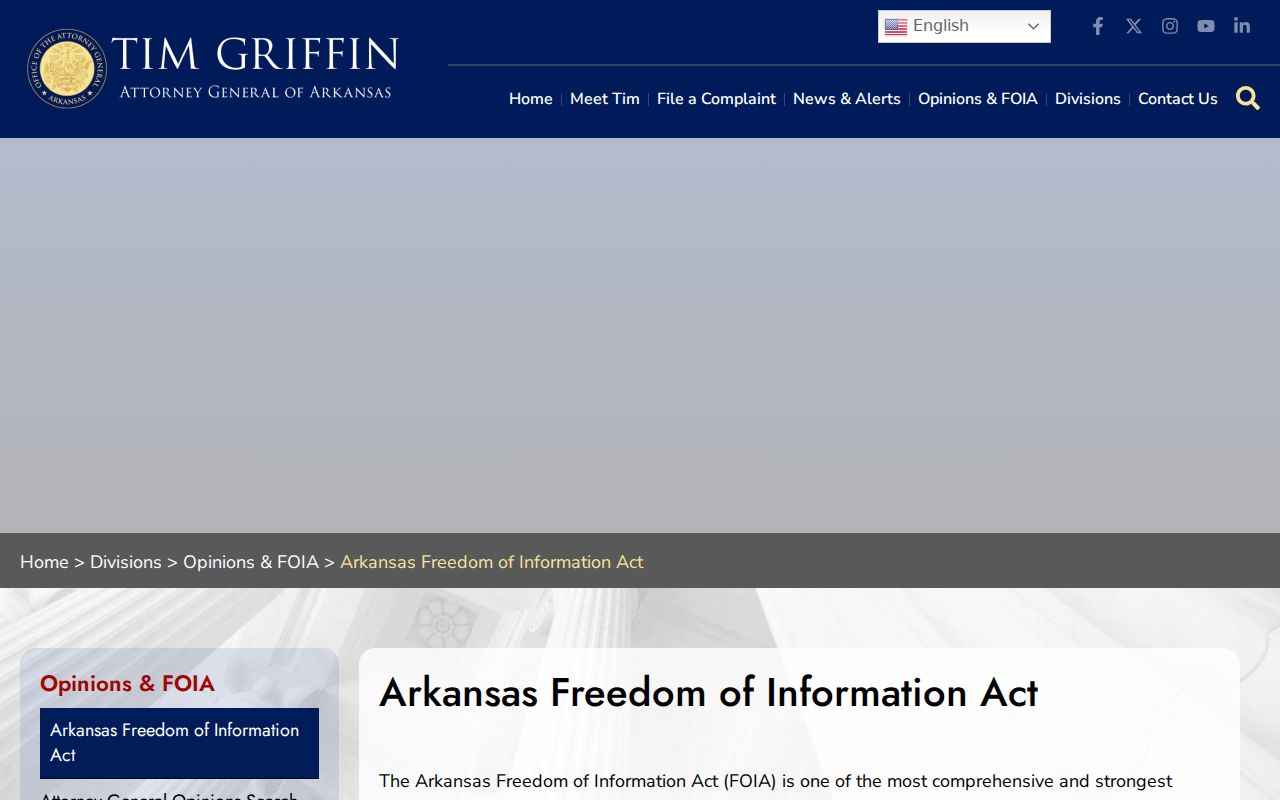
The official source reinforces that a records request follows Arkansas access law, even though the police department remains the custodian of its own files.
Records at El Dorado Police
El Dorado Police reports about 51 sworn officers and 14 civilian employees serving a city population of about 18,000, with a daytime population closer to 30,000 because of business activity. Administration, Patrol, Criminal Investigations, and Criminal Apprehension create different records. Patrol may generate the first incident file. Detectives can add investigative material. The apprehension function may connect a local arrest to a warrant or another agency.
Specialized work includes SWAT, bomb technicians, canine officers, and task-force positions with the U.S. Marshals Fugitive Apprehension program, the FBI Render Safe program, and FBI ICAC. That mix explains why the agency named on a record is not always the only agency involved. A requester should still begin with the office that created the report, then follow any case number or referral shown in the released file.
El Dorado Police Contact Channels
Choosing the right line saves time. El Dorado lists Front Desk and Records at (870) 881-4800, nonemergency dispatch at (870) 863-4141, the Detective Division at (870) 881-4810, and the Communications Center at (870) 881-4843. Crime Stoppers is (870) 863-INFO, or 4630. Narcotics is (870) 881-4826. Emergency calls go to 911.
Use the records line for an existing report or copy. Use dispatch for a current nonemergency event. A detective line is not a substitute for a records request, and the general city contact form is not a police report portal. It asks for general contact details and comments, but the research identifies it as a city contact channel, not a dedicated request form. Route the request to EPD and confirm the process with records staff.
Booking and Arrest Records in El Dorado
When El Dorado officers make an arrest and the person enters the county detention system, the booking becomes a Union County Sheriff's Office record. Search the Sheriff's Inmate Roster or Citizen Connect Inmate Confinements for current or recent custody. Citizen Connect offers Current Confinements, Admits by Date Range, Charges, and Arresting Agency views. Date presets include the last 24 hours and last 7 days, with a custom range limited to 31 days.
Select El Dorado Police Department in the arresting-agency control when appropriate. Results may show a booking number, age, sex, race, booking date, charges, bond, arresting agency, and a profile link. A booking charge reflects jail intake. Prosecutors may later change or decline it, and a court may dismiss or resolve it differently. For full county booking methods, the Union County arrest search explains each access channel.
Why El Dorado Arrests Go Countywide
El Dorado does not need a separate public jail roster for people received at the Union County Detention Center. EPD creates the city police record. The county jail creates the confinement record. A prosecutor and court create the filed case. Each can appear on a different clock, and one may exist when another does not.
If an arrest is too new for the roster, call the arresting agency or Sheriff's Office. If the person has left the jail, a current-confinement view may no longer answer a historical question. Search by an admit date where available, then check Search ARCourts for a filed case. If no charge was filed, a booking may exist without a court docket. Never treat an arrest as proof of guilt.
The Arkansas Code public-access portal is an official route for checking the governing law.
Statutory access and local custody systems overlap, but the office holding the source record remains the place to confirm it.
The El Dorado Municipal Court File
District and municipal matters route through Union County District Court AR and the municipal clerk or district court clerk at (870) 864-1950. That channel covers local case questions, dates, payments, fees, and related court contact. Felonies and other circuit matters belong with the Union County Circuit Clerk, not the municipal counter.
| Court channel | Union County District Court AR app and municipal or district clerk phone line. |
|---|---|
| Local matters | Lower-level criminal, traffic, citation, and municipal matters assigned to district court. |
| Case lookup | District Court app, clerk contact, and Search ARCourts where the participating court supplies data. |
| Docket contents | Parties, filings, charges or dispositions, future events, judgments, and public documents when available. |
| Copies and fees | Ask the district clerk about the specific file; circuit-copy fees belong to the Circuit Clerk schedule. |
Search ARCourts does not make every detail public. Arkansas Supreme Court Administrative Order 19 limits some online or public information. A clerk can explain the access process but cannot give legal advice. Use the case number when one is known.
El Dorado Warrant Search Workarounds
The EPD site marks its warrant-list area as “Warrant List Coming Soon.” It is not a live warrant search. Do not rely on that page to decide whether a warrant exists. For your own court question, call the municipal or district clerk at (870) 864-1950 or the Union County Circuit Clerk at (870) 864-1940. A court-issued bench warrant may be tied to a missed appearance or noncompliance in the case file.
Police or sheriff channels can address execution and custody questions, but approaching an office while worried about an active warrant has legal consequences. A lawyer can check the case and advise on a safe response. Citizen Connect also lists a Criminal Papers Search, though a paper-search entry and a court's warrant record should not be assumed to be the same complete source.
How El Dorado Records Reach County
An EPD incident begins in city files. If an arrest leads to county jail intake, the Sheriff's Office adds a booking. Prosecutors decide what charges to file. Circuit or district court then records events and disposition. Fingerprints and reported outcomes can feed the state criminal-history system maintained through ACIC and Arkansas State Police channels.
Record flow: El Dorado Police Department › Union County Courts › Arkansas Crime Information Center
Use the newest custodian for the stage being checked. EPD is strongest for the original report. Citizen Connect is strongest for recent county confinement. The clerk is strongest for filed charges and the court outcome. Arkansas State Police is the public-facing state check agency. Gaps can arise when a disposition has not reached the repository, a record was sealed, or public law restricts the information.
El Dorado Circuit Court Records
El Dorado is the Union County seat, so the courthouse concentrates much of the local criminal-record trail. The Union County Circuit Clerk is at 101 North Washington, Suite 201, El Dorado, Arkansas 71730, phone (870) 864-1940. The clerk keeps circuit court records, prepares dockets, and handles questions about fines, payments, appearances, warrants, and certified records.
Start with Search ARCourts by participant name or case context. It can show parties, judge, filings, charges and dispositions, future events, judgments, and some public documents. Then contact Suite 201 when the online result is missing, when a certified copy is needed, or when the court file must be checked directly. Standard circuit copy research lists $0.50 per page, $5 for certification, and $15 for authentication.
The Arkansas sealing procedure also routes an eligible petition to the circuit or district court in the county of offense and conviction.
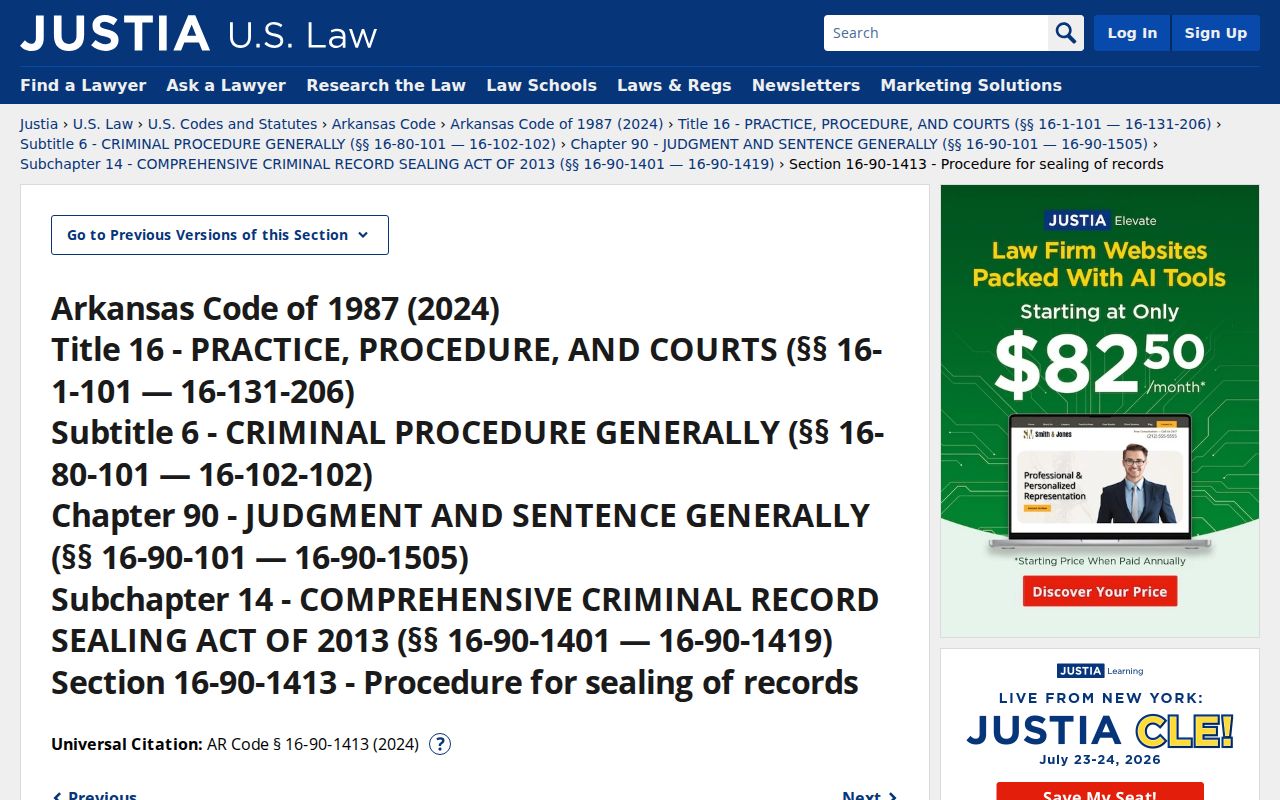
For an El Dorado case, the sentencing court and its clerk are therefore central to both copies and any eligible sealing process.
El Dorado Charges and Case Levels
The charge shown at booking may not be the charge filed in court. Police list the basis for arrest. A prosecutor reviews the matter and chooses whether and what to file. The court docket then records the formal charge, pleas, hearings, disposition, and sentence. Readers should compare those stages instead of merging them into one “criminal record.”
Arkansas offense classes also affect court routing and possible penalties. The official incarceration ranges are set in Arkansas Code section 5-4-401. That source is shown below for readers who need the governing classification text.
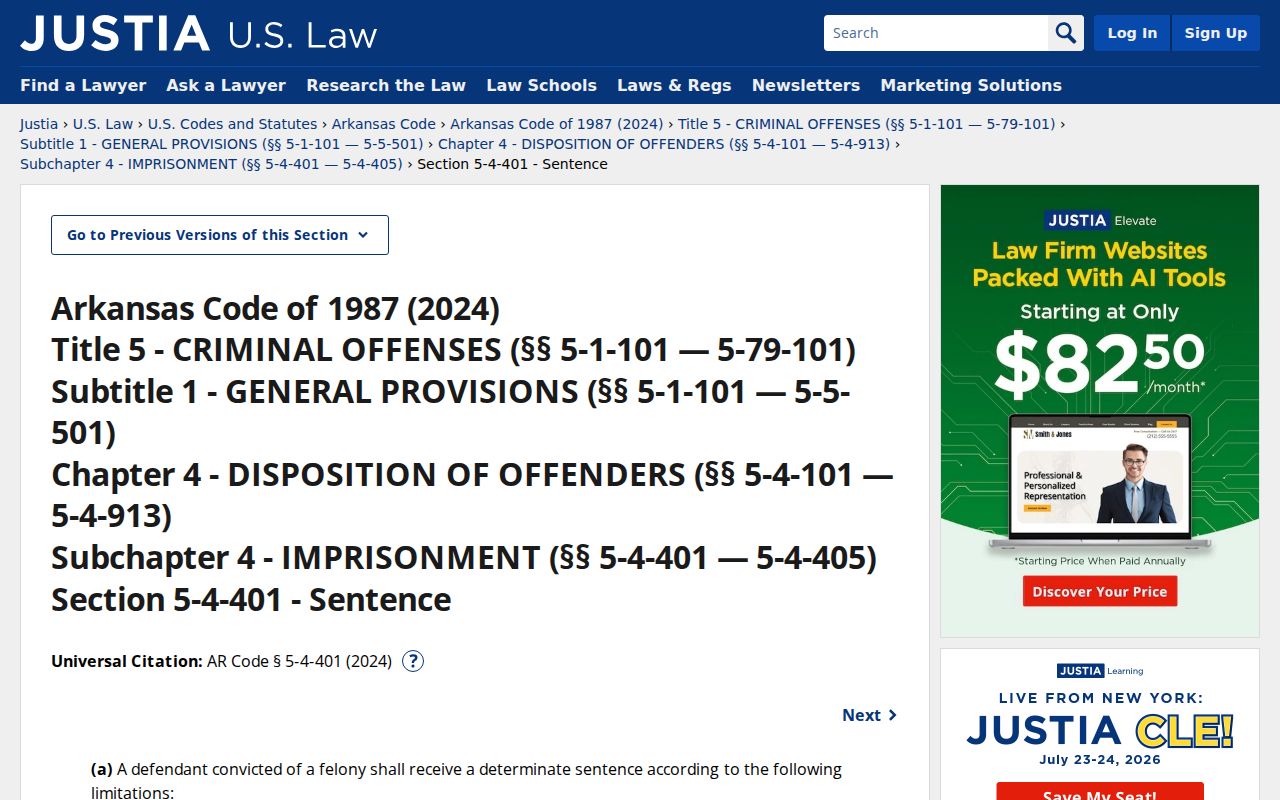
The classification can help identify why a case sits in circuit rather than district court, but only the filed docket and judgment establish the case's actual path and outcome.
El Dorado Federal Task-Force Records
EPD's task-force links mean some investigations can cross city, county, state, and federal lines. The department identifies positions connected with U.S. Marshals Fugitive Apprehension, FBI Render Safe, and FBI ICAC. A city report may show EPD involvement while the later prosecution appears in a different court system.
Search ARCourts covers Arkansas participating courts, not federal dockets. Federal cases in the Western District of Arkansas use federal court channels, and El Dorado has a federal courthouse. If a local search produces no state case after a federal task-force arrest, confirm the prosecuting jurisdiction rather than assuming no case exists. PACER is the federal docket service, while the original EPD record still belongs with the city custodian subject to lawful restrictions.
El Dorado Record Access Rules
Arkansas law does not make every police, court, or repository detail public in the same way. City police records may be requested under the Arkansas Freedom of Information Act, but exemptions can protect active investigation material, juvenile information, victims, and sensitive identifiers. Court access is governed in part by Administrative Order 19. Repository dissemination is a separate system, not simply an open copy of every El Dorado file.
Key statutes and rules:
Ark. Code Ann. § 25-19-105 permits Arkansas citizens to inspect and copy public records unless an exemption applies.
Arkansas Supreme Court Administrative Order 19 limits some court information online or from public access.
Ark. Code Ann. § 12-12-1503 defines criminal-history dissemination and shows why repository access differs from court access.
Ask for a specific record, date range, and event when possible. If staff withhold or redact material, request the legal basis. For a record that appears wrong, correct the originating court or agency first, then ensure the corrected disposition reaches ACIC when state history is affected.